Hamdan NeuroAI Lab · Surgical AI & Computational Neuroscience

Pioneering Surgical Intelligence, Multimodal AI, & Ground-Truth Clinical Decision Systems.

Bridging high-volume endoscopic spine surgery and advanced artificial intelligence. We benchmark frontier Vision-Language Models against real patient cohorts, engineer autonomous spine fracture detection algorithms, and establish the anatomical safety baselines for the next generation of neurosurgical care.

147pts
Multimodal Cohort

Consecutive real-world spine MRI & clinical data benchmarked.

3Frontier VLMs
AI Models Evaluated

GPT 5.5, Gemini 3.1 Pro, and Claude Sonnet 4.6 in direct clinical trial.

>99%
Bayesian Superiority

Probability of human anatomical precision over AI spatial localization.

3D CT/MRI
Fracture Detection

Automated deep learning vertebral segmentation & AO classification pipeline.

01

Neurosurgical ground truth meets computational precision.

Dr. med. Mohammad Hamdan, Neurosurgeon and Head of NeuroAI Lab
Dr. med. Mohammad Hamdan Head of Science Lab · Oberarzt Neurochirurgie
Facharzt für Neurochirurgie FEBNS (Barcelona) Master Health Business Admin (FAU) Eurospine Diploma DWG-Zertifikat

Dr. med. Mohammad Hamdan

Lead Investigator · Head of Hamdan NeuroAI Lab · Oberarzt für Wirbelsäulenchirurgie & Neurochirurgie

Dr. Mohammad Hamdan is a board-certified neurosurgeon (Facharzt für Neurochirurgie), Fellow of the European Board of Neurological Surgery (FEBNS), and Oberarzt for spine surgery and neurosurgery at Fachklinik 360° in Ratingen, Germany. He serves as the Head of the Neuro and AI Science Lab and is an academic investigator affiliated with Friedrich-Alexander-Universität Erlangen-Nürnberg (FAU).

With extensive clinical expertise in full-endoscopic spine procedures, minimally invasive stabilization, and complex pain therapy, Dr. Hamdan combines active high-volume surgical practice with rigorous computational research. His academic background includes a Master of Health Business Administration (MHBA) at FAU focusing on Augmented Reality in Healthcare, a doctorate (Dr. med.) at Justus Liebig University Giessen on Endoscopic Transforaminal Lumbar Intervertebral Fusion, and high-level programming proficiency in Python, C++, SPSS, and neuroimaging toolchains (FSL fMRI).

"Artificial Intelligence in surgery cannot rely on generic text benchmarks. Patient safety requires rigorous verification against anatomical ground truth, precise spatial localization, and strict Bayesian validation before any model touches a clinical pathway."

Clinical Specialty

Endoscopic spine surgery, percutaneous dorsal stabilization, spinal canal decompression, and interventional pain therapy.

AI & Data Science

Multimodal Vision-Language Models, Bayesian decision concordance, automated DICOM/PACS pipelines, and 3D fracture segmentation.

Institutional Roles

Oberarzt at Fachklinik 360° (Ratingen) & Academic AI Research at FAU Erlangen-Nürnberg.

02

Multimodal LLMs vs. Medical Doctors in Degenerative Spine Surgery.

Therapy Indication Accuracy (Operative vs. Conservative)

N = 147 consecutive lumbar spine cases · Ground truth by Senior Spine Surgeon

Dual Composite MRI Methodology

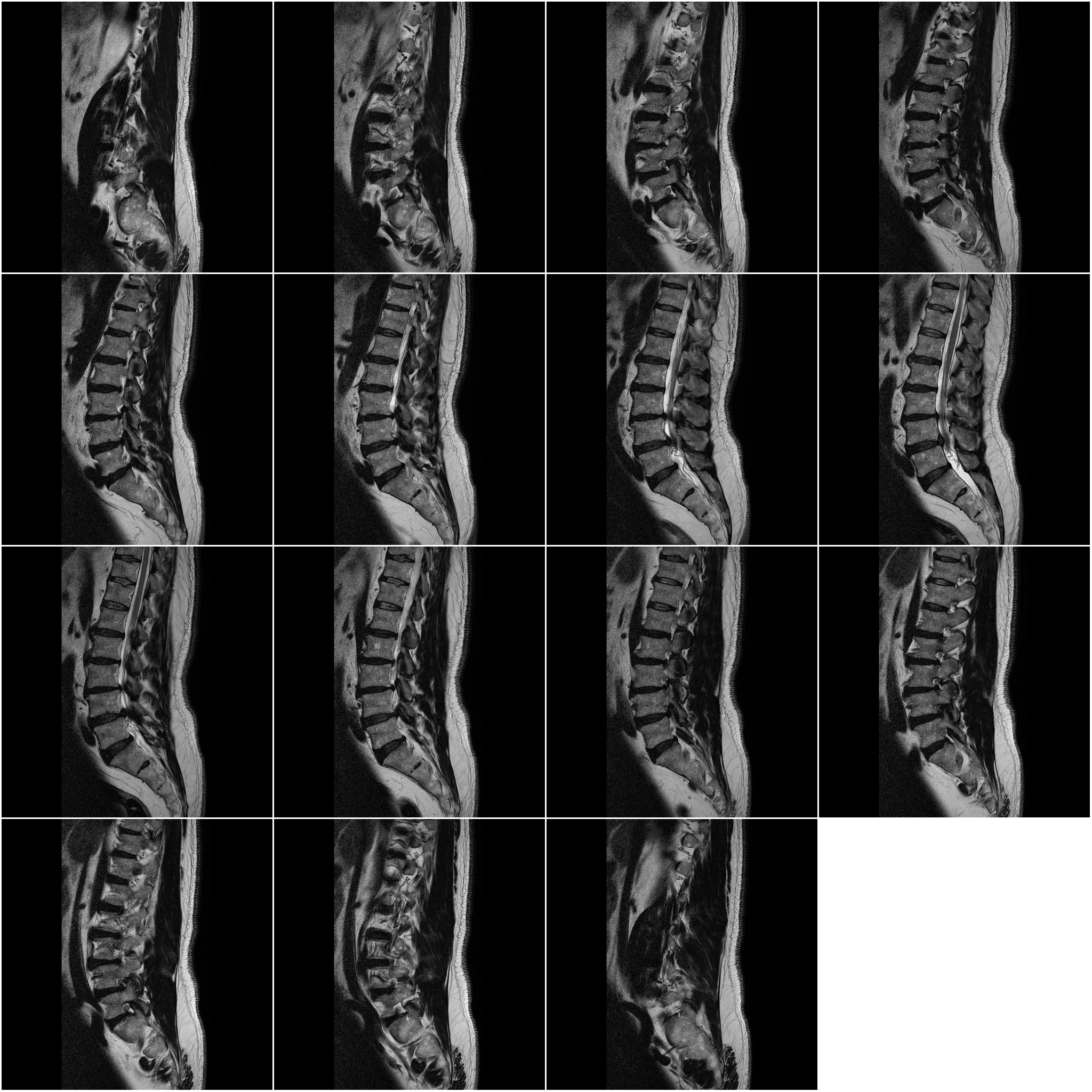
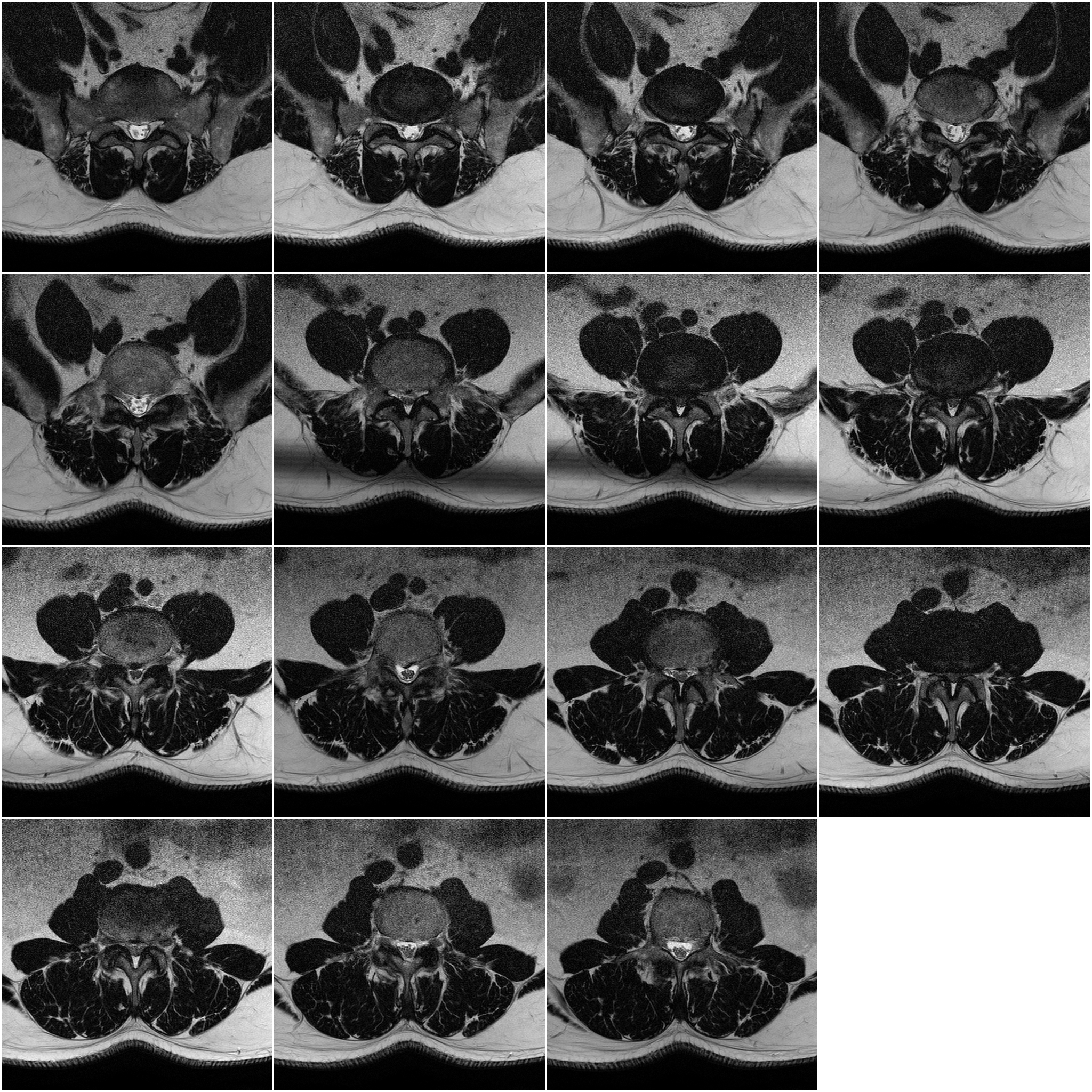
To mirror traditional printed radiographic series and create a standardized vision-language input, Dr. Hamdan authored a custom Python pipeline synthesizing PACS DICOM stacks into dual-composite PNG representations for all 147 patients:

Sagittal Composite MRI overview of lumbar spine series
Figure 1A · Sagittal Composite MRI Series T2-Weighted Sequence
Axial Composite MRI overview of lumbar disc spaces
Figure 1B · Axial Composite MRI Series L1/L2 to L5/S1 Discs
03

Autonomous Spine Fracture AI & Next-Gen Surgical Systems.

Project Alpha · In Development

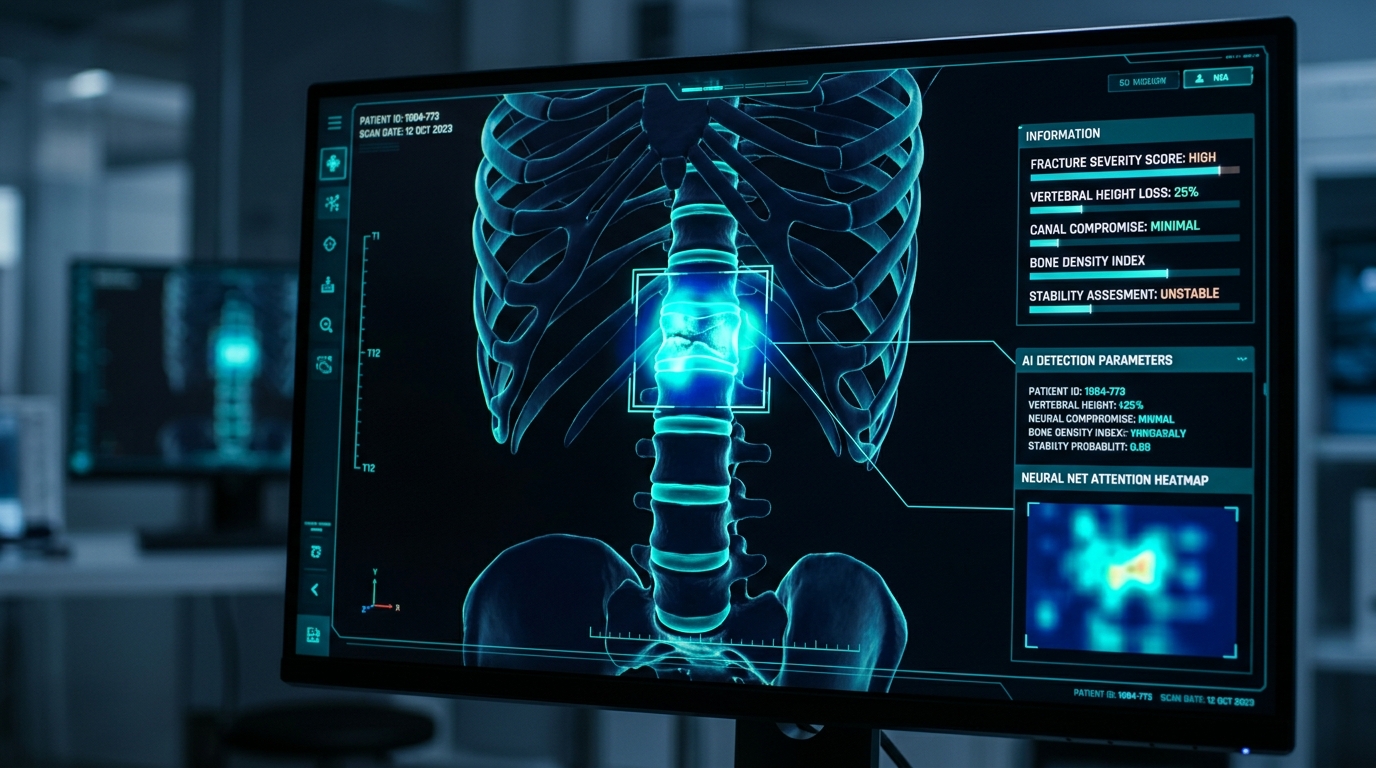
Deep 3D Spine Fracture Detection & AO Classification AI

Acute vertebral compression fractures (VCFs) and burst fractures are frequently missed on initial trauma CT or degenerative MRI scans. Our lab is developing a volumetric 3D deep vision architecture that autonomously segments vertebral bodies, quantifies loss of anterior/posterior vertebral height, detects spinal canal encroachment, and computes standard AO Spine Thoracolumbar Classification scores to guide emergency and elective triage.

  • Automated Vertebra Localization & Labeling: Multi-level semantic segmentation identifying T1 through L5 vertebrae with millimeter precision.
  • Occult & Osteoporotic Fracture Screening: High-sensitivity detection of subtle bone marrow edema and cortical endplate impactions.
  • Quantitative Spinal Instability Index: Real-time assessment of posterior ligamentous complex (PLC) disruption risk and surgical urgency (Conservative vs. Balloon Kyphoplasty vs. Dorsal Spondylodesis).
Interactive Fracture AI Scanner Live Inference Simulation

Select a spinal level to test the model's automated segmentation and stability diagnostic:

Target Level Thoracic Vertebra T12
Fracture Probability 94.8%
Vertebral Height Loss 32% (Superior Endplate)
Canal Compromise Moderate (2.4mm retropropulsion)
AO Spine Class A3 (Incomplete Burst)
Clinical Triage Surgical Evaluation / Percutaneous Stabilization
3D Spine CT AI Fracture Detection neural interface
AI Deep Learning · 3D CT/MRI Fracture Detection Architecture
Project Beta · Active Research

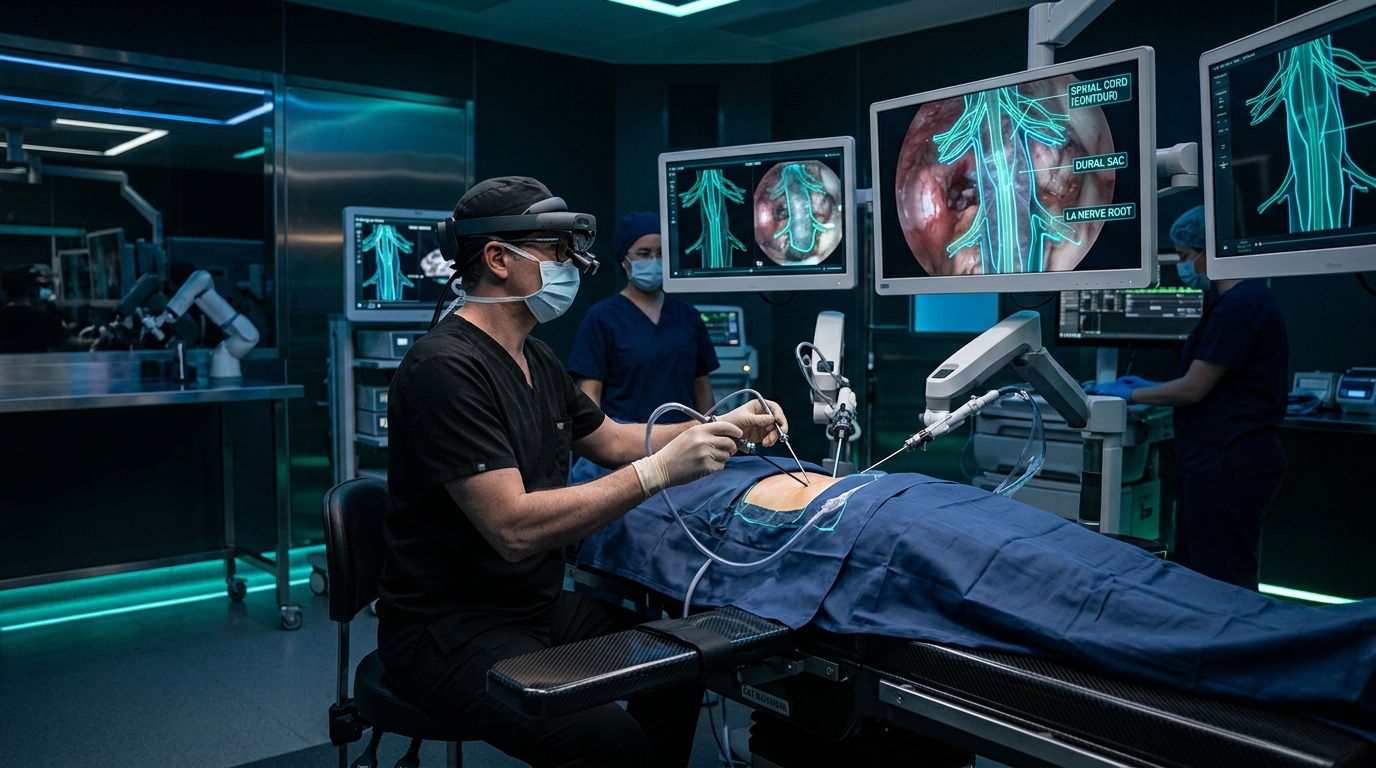
Real-Time Intraoperative Endoscopic Computer Vision & Navigation

Full-endoscopic spine surgery (interlaminar and transforaminal) operates through narrow 7mm optical corridors where neural structure recognition is paramount. We are training ultra-low latency edge vision networks to semantically segment the thecal sac, exiting/traversing nerve roots, yellow ligament, and herniated fragments at >60 FPS directly on the surgical monitor to prevent intraoperative dural tears and nerve injuries.

  • Sub-15ms Edge Inference: Embedded neural accelerators providing zero-perceptible-latency segmentation overlays.
  • Adverse Event Early Warning: Automatic proximity alarms when drilling tools approach critical neurovascular corridors.
  • Surgical Skill Assessment: Automated kinematic analysis and operative milestone tracking for fellowship training.
Endoscopic neurosurgery AI navigation and neural segmentation
Intraoperative Computer Vision · Live Endoscopic Neural Overlays
Project Gamma · Clinical Deployment

GDPR-Aware Multimodal Real-Time Clinical Documentation & Anamnesis

Physicians spend up to 40% of their clinical hours documenting patient encounters. Dr. Hamdan has developed a privacy-preserving, on-premise clinical documentation engine that transcribes doctor-patient consultations, extracts structured neurological deficits (dermatome mapping, motor weakness grading, reflex alterations), and formats standardized clinical notes under strict European GDPR / DSGVO compliance.

  • Zero-Data-Leakage Architecture: Fully local or private sovereign cloud deployment ensuring patient data never trains public foundation models.
  • Medical Entity Extraction: Automatic ICD-10 and OPS coding for degenerative spine interventions and conservative therapies.
  • Automated Decision Support Generation: Cross-referencing clinical examination findings against guideline criteria (SPORT trial, NASS, DWG).
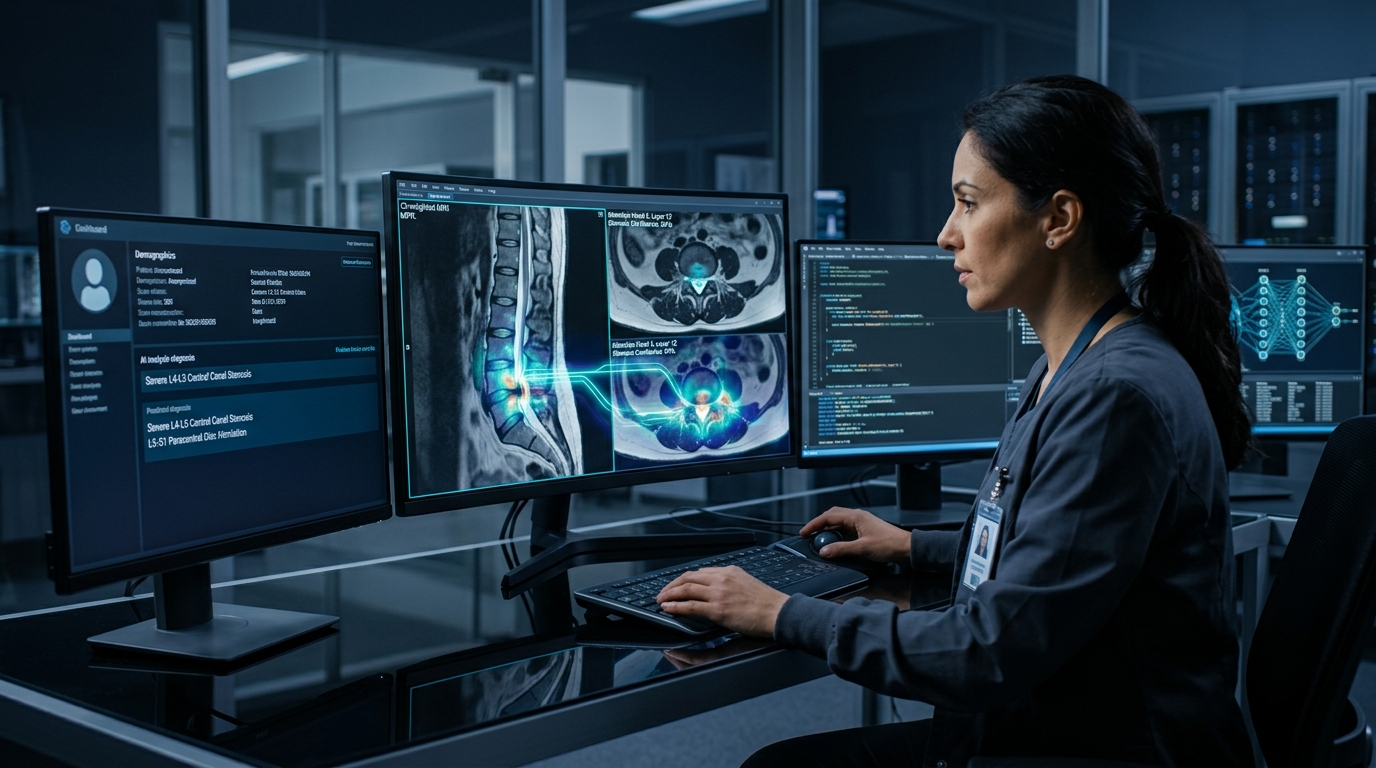
Multimodal Clinical Anamnesis and Spine MRI AI workstation
Clinical NLP & Vision · GDPR-Compliant Surgical Decision Systems
04

Reproducible pipelines from PACS DICOM to Bayesian Priors.

PIPELINE 01

DICOM Extraction & Anonymization

Automated extraction from hospital PACS archives. Custom Python automation scripts de-identify patient PHI, extract axial/sagittal T2 sequences, and assemble high-resolution standardized dual composite matrices.

PIPELINE 02

Direct API Vision-Language Orchestration

Base64-encoded image payloads queried against direct developer API endpoints (GPT 5.5, Gemini 3.1 Pro, Sonnet 4.6) under strict non-reasoning prompts and structured output schemas to prevent prompt leakage.

PIPELINE 03

Blinded Clinical Baseline Consensus

Independent evaluation by rotating neurosurgical resident doctors under identical visual constraints. Unanimous senior spine surgeon ground truth with independent third-surgeon tie-breaking for inter-observer reliability.

PIPELINE 04

Bayesian Modeling & Statistical Bounds

Beta-Binomial analytical models with neutral Beta(1,1) priors to quantify 95% Credible Intervals (CrI), Cochran’s Q omnibus tests, and Holm-Bonferroni adjusted McNemar exact tests implemented via Python and SPSS.

05

Peer-reviewed literature & surgical dissertations.

2026

Multimodal Large Language Models vs. Medical Doctors in Degenerative Lumbar Spine Surgery: A Retrospective Decision Concordance Study of 147 Patients

Mohammad Hamdan (Lead Investigator & Corresponding Author), Anas Al-Bakheet, Imke Fuetterer, Ibrahim Alshaer, Ali Harati

medRxiv · Cold Spring Harbor Laboratory Press · DOI: 10.64898/2026.08.04.26359718

View Preprint ↗
2025

A Novel Technique of Endoscopic Transforaminal Lumbar Intervertebral Fusion and Percutaneous Dorsal Spondylodesis in Degenerative Lumbar Spinal Disorders

Mohammad Hamdan (Doctoral Thesis · Advisor: Prof. Dr. med. Kartik Krishnan)

Justus-Liebig-Universität Gießen (JLU) · Medical Faculty

Doctoral Thesis
2024

Augmented Reality (AR) in der Gesundheitsversorgung (Augmented Reality in Healthcare Provision)

Mohammad Hamdan (Master Thesis, Master of Health Business Administration)

Friedrich-Alexander-Universität Erlangen-Nürnberg (FAU)

MHBA Thesis
2020

Vertebral Body Osteolysis 6 Years After Cervical Disk Arthroplasty

Ali Harati, Paul Oni, Lucas Oles, Thomas Reuter, Mohammad Hamdan

Journal of Neurological Surgery Part A: Central European Neurosurgery · DOI: 10.1055/s-0039-1698435 · PMID: 31962353

View Paper ↗
2015

L-Citrulline Supplementation Reduces Plasma Arginase Activity in Type 2 Diabetes Patients

Mohammad Hamdan et al.

Circulation · American Heart Association · DOI: 10.1161/circ.132.suppl_3.15199

View Abstract ↗
2018

Central Corneal Thickness in a Jordanian Population and its Association with Different Types of Glaucoma

Mohammad Hamdan et al.

BMC Ophthalmology · PubMed 30373555 · Open Access via PubMed Central

View on PubMed ↗
06

Collaborate with the Hamdan NeuroAI Lab.

Research Collaborations & Positions

We welcome collaborative research inquiries from neurosurgical departments, machine learning research institutes, biomedical imaging laboratories, and graduate students (MD/PhD candidates in AI in Medicine).

Key areas for collaborative proposals include:

  • Multi-center validation of the 147-patient spine surgery benchmark.
  • Clinical trials on 3D CT/MRI AI Spine Fracture Detection algorithms.
  • Edge computing deployment for real-time endoscopic computer vision.
  • Privacy-preserving clinical LLMs for hospital documentation.
Initiate Academic Partnership →